
Recognize. Brake. Set down gently.
Load Collision Prevention and Soft Landing for STS and Intermodal Cranes
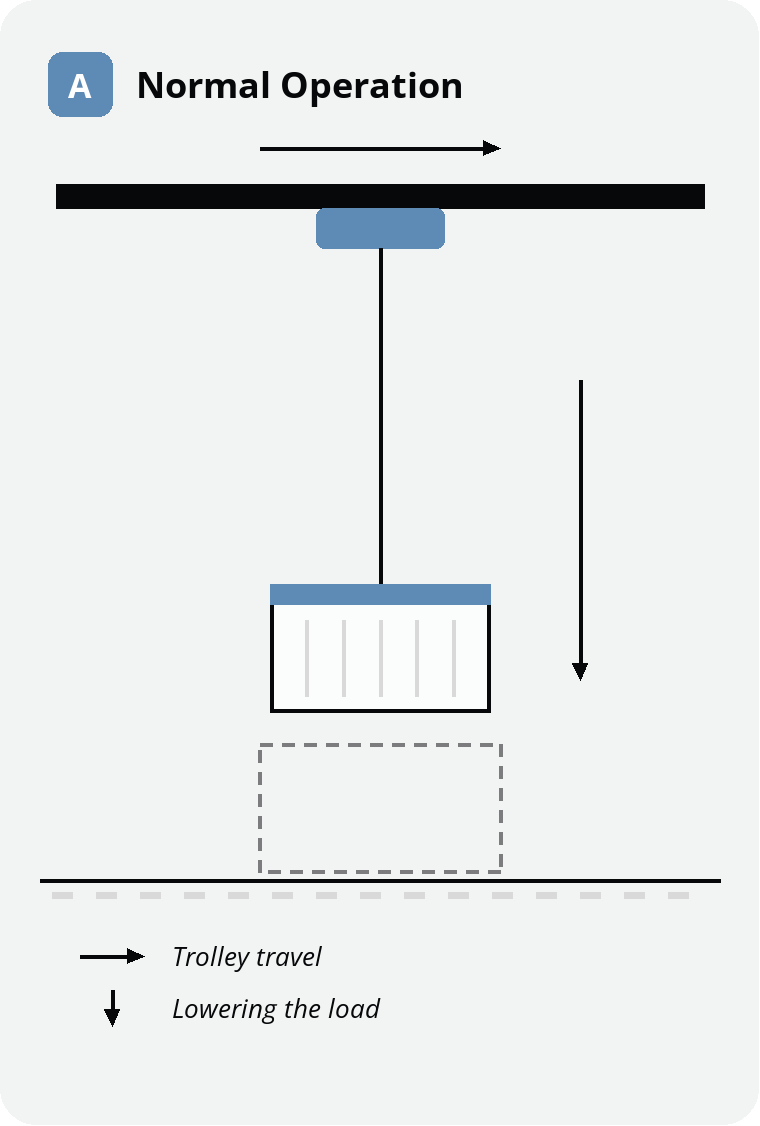
Our Load Collision Prevention system scans the area around the load in 3D, detects stacks, railcars, vehicles, and people, and stops the crane. Soft Landing sets the spreader and load down in a controlled and gentle manner.
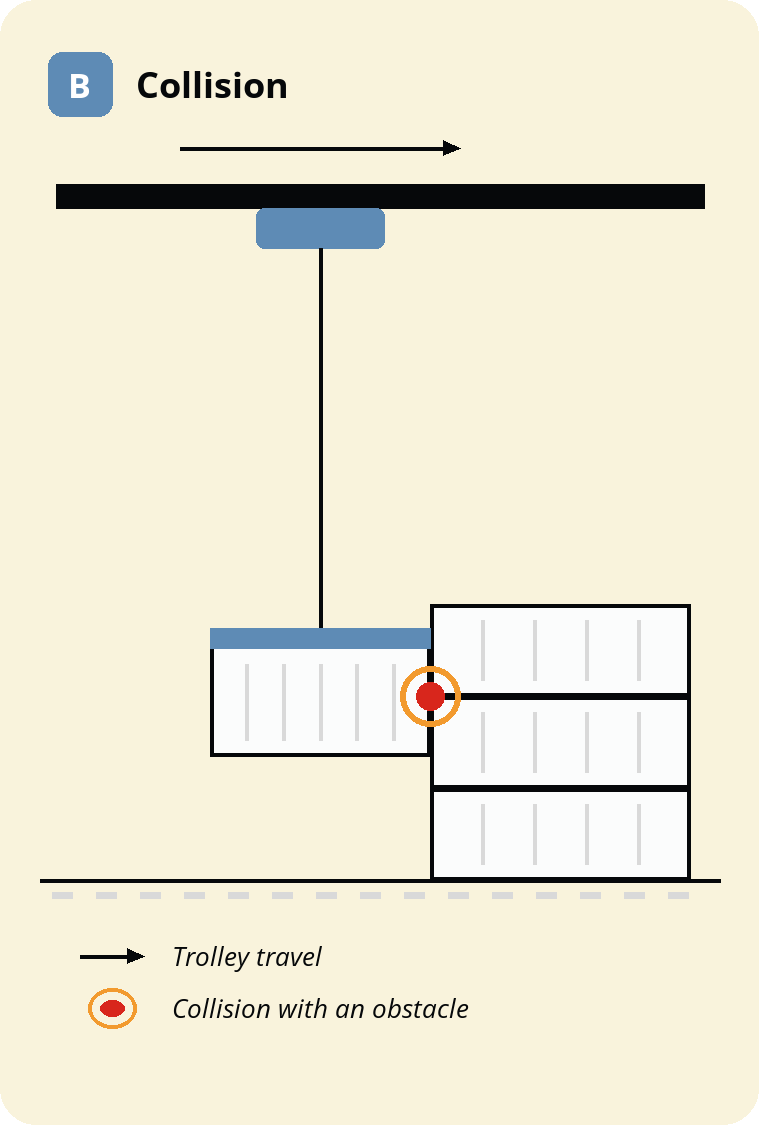
What the crane operator can’t see hits the load
From the cab, the unloading area is far below and partially obscured. Piles of cargo, railcars, or a parked semi-trailer can quickly disappear from view, especially when under time pressure or in bad weather.
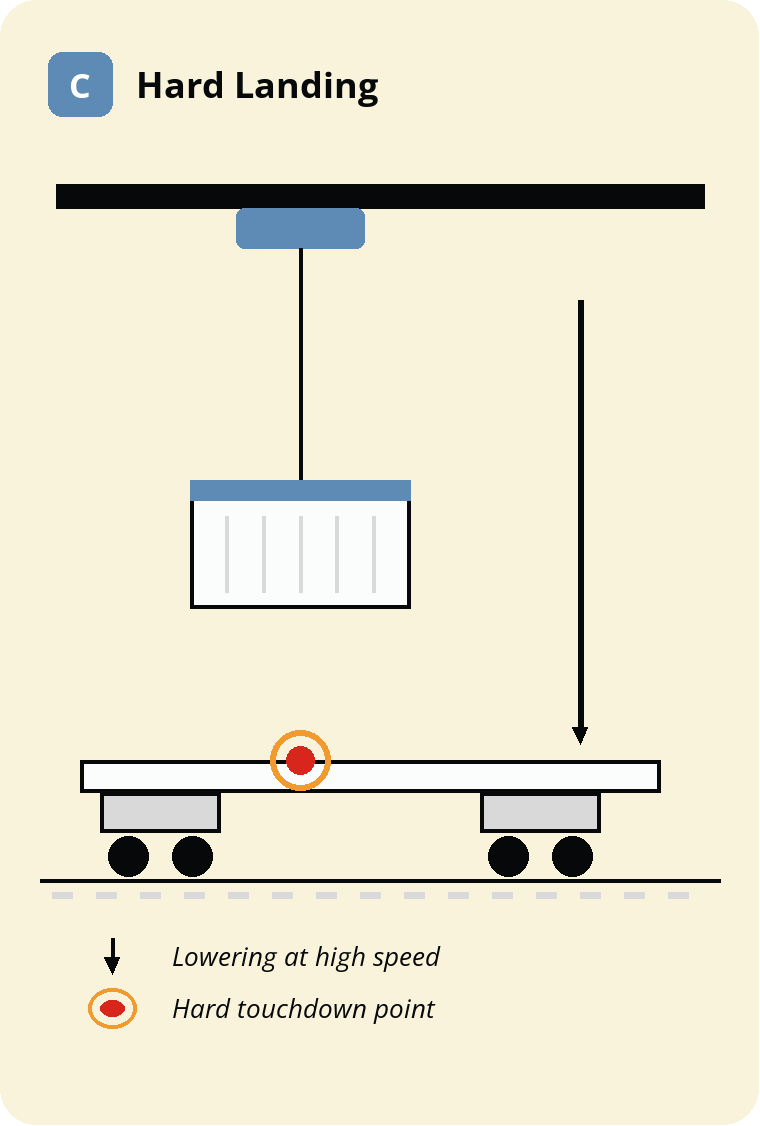
All it takes is a moment of inattention: The load hits something, or the spreader touches down too quickly. This results in damage to the load, the loading unit, and the infrastructure.
It’s not just the damaged cargo
Hard Landings
leave traces
to the spreader, load, and loading unit.
And when it comes to collisions involving people, there’s more at stake than just property.
Borders Without Assistance
Crane operators rely on experience and good judgment. This approach works, but it has its limits, especially when setting down loads.
View from above
From a great height, it is difficult to estimate the distances to stacks, railcars, and semi-trailers.
Covered Drop-Off Area
The load itself obscures what lies directly beneath it.
Time Pressure in Transshipment
When under time pressure, the risk of hard landings and tight maneuvers increases.
Moving Obstacles
Vehicles and people are constantly changing their positions within the work area.
Your crane with our Load Collision Prevention
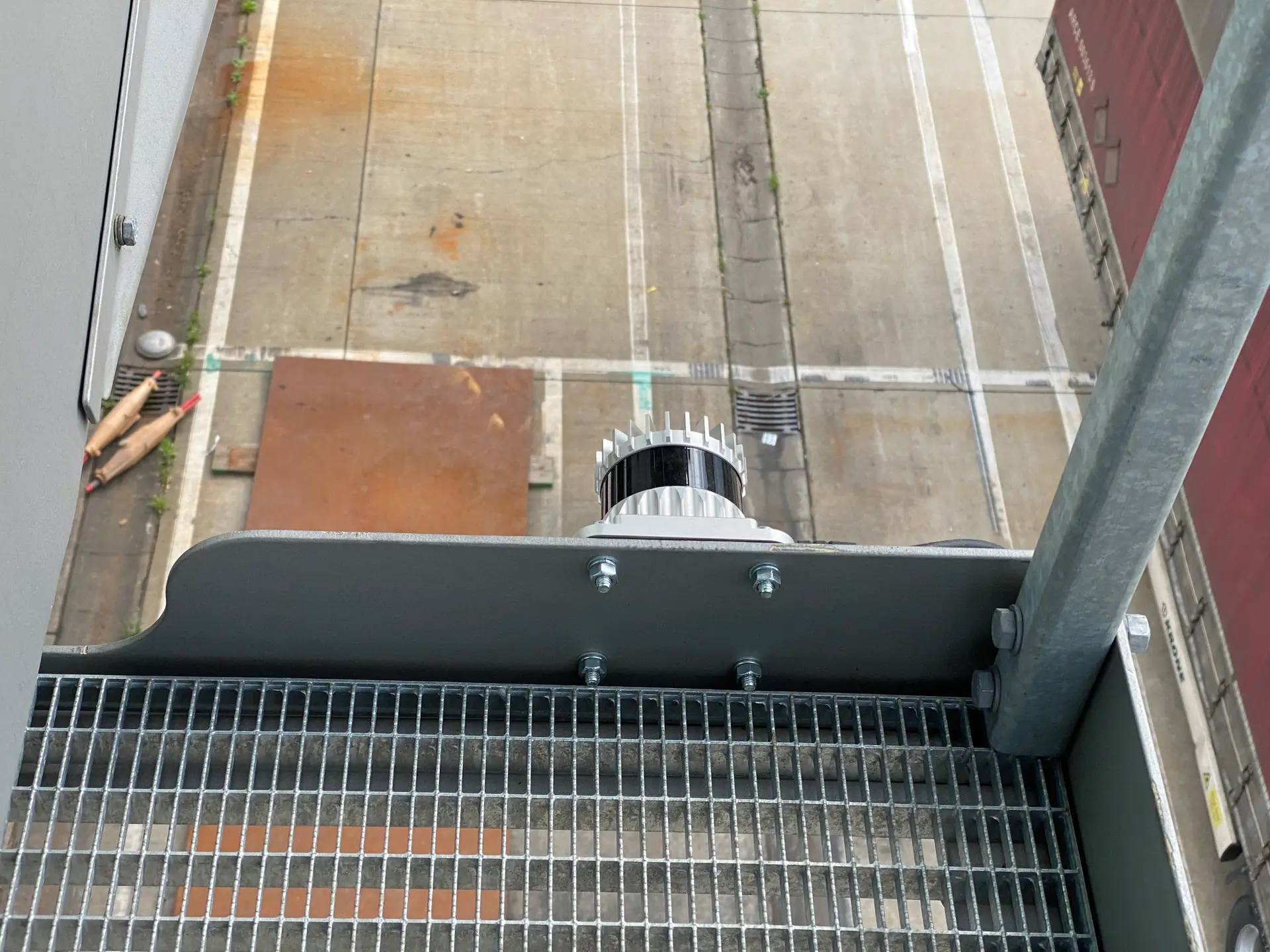
All About the Load
scanned in 3D
Lidar sensors scan the area around the load at 15 Hz and record approximately 2 million data points per second.
Our Load Collision Prevention system uses this information to detect obstacles before the load reaches them.
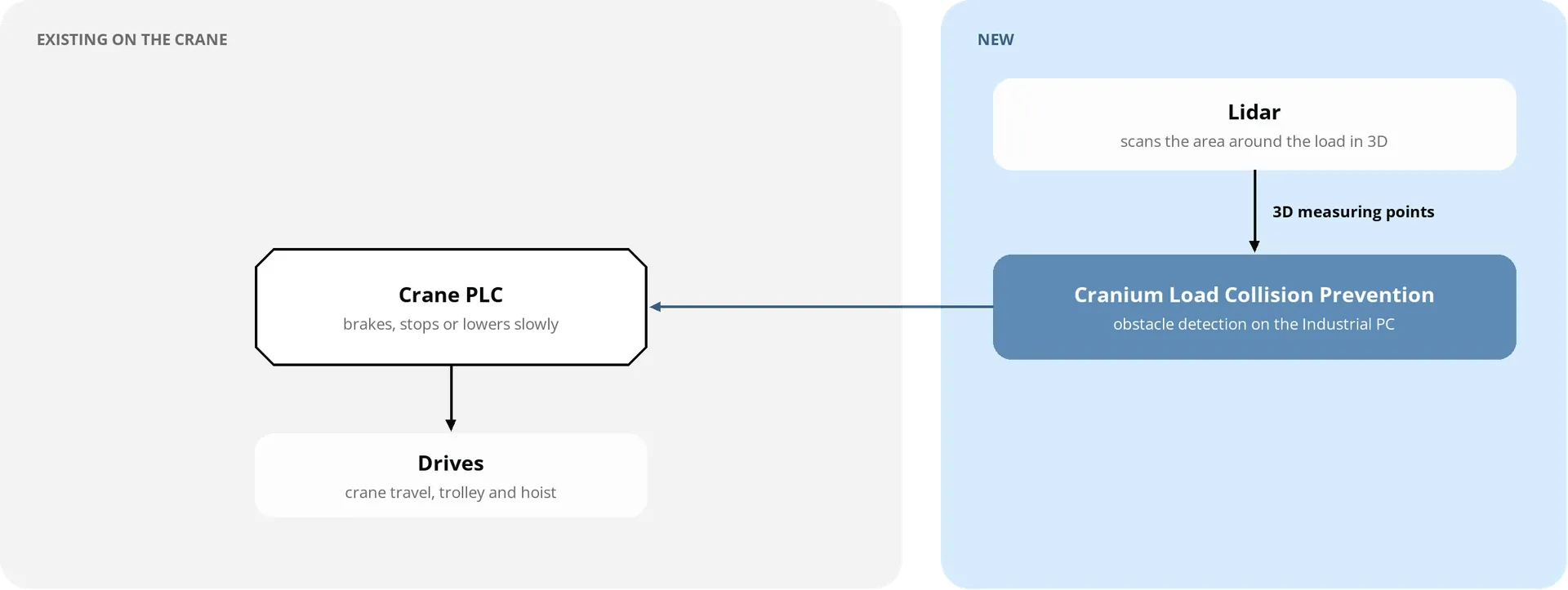
Step 1
Lidar
3D lidar sensors mounted on the crane scan the area around the load, even in rain and snow.
Step 2
Cranium Load Collision Prevention
The industrial PC creates 3D maps of the environment, filters out the crane structure, and detects obstacles.
Step 3
Crane PLC
The PLC slows down, stops, or lowers the load at a reduced speed.
Interested in Load Collision Prevention for your crane?
Find out how we can help.
Our Load Collision Prevention in Day-to-Day Operations
Real-Time Obstacles
Vehicles and people in motion are continuously detected, not just stationary structures.
Gentle Weaning
The shock-absorbing, gentle lowering of the spreader and load protects the material and reduces noise.
Braking in tight spaces
In narrow gaps, the crane lowers itself gradually to avoid collisions.
Surroundings Instead of a Crane
Load Collision Prevention clearly distinguishes between the surrounding environment and crane components.
In rain and snow
The lidar sensors are suitable for use in rain and snow and are rated IP68 and IP69K.
Expandable
The collision protection system can be extended to cover the entire crane and integrates with existing safety and driver-assistance systems.
On duty in Cologne-Eifeltor
Our technology is put to the test every day by Europe’s largest logistics and infrastructure companies. We don’t just deliver systems—we deliver measurable results.

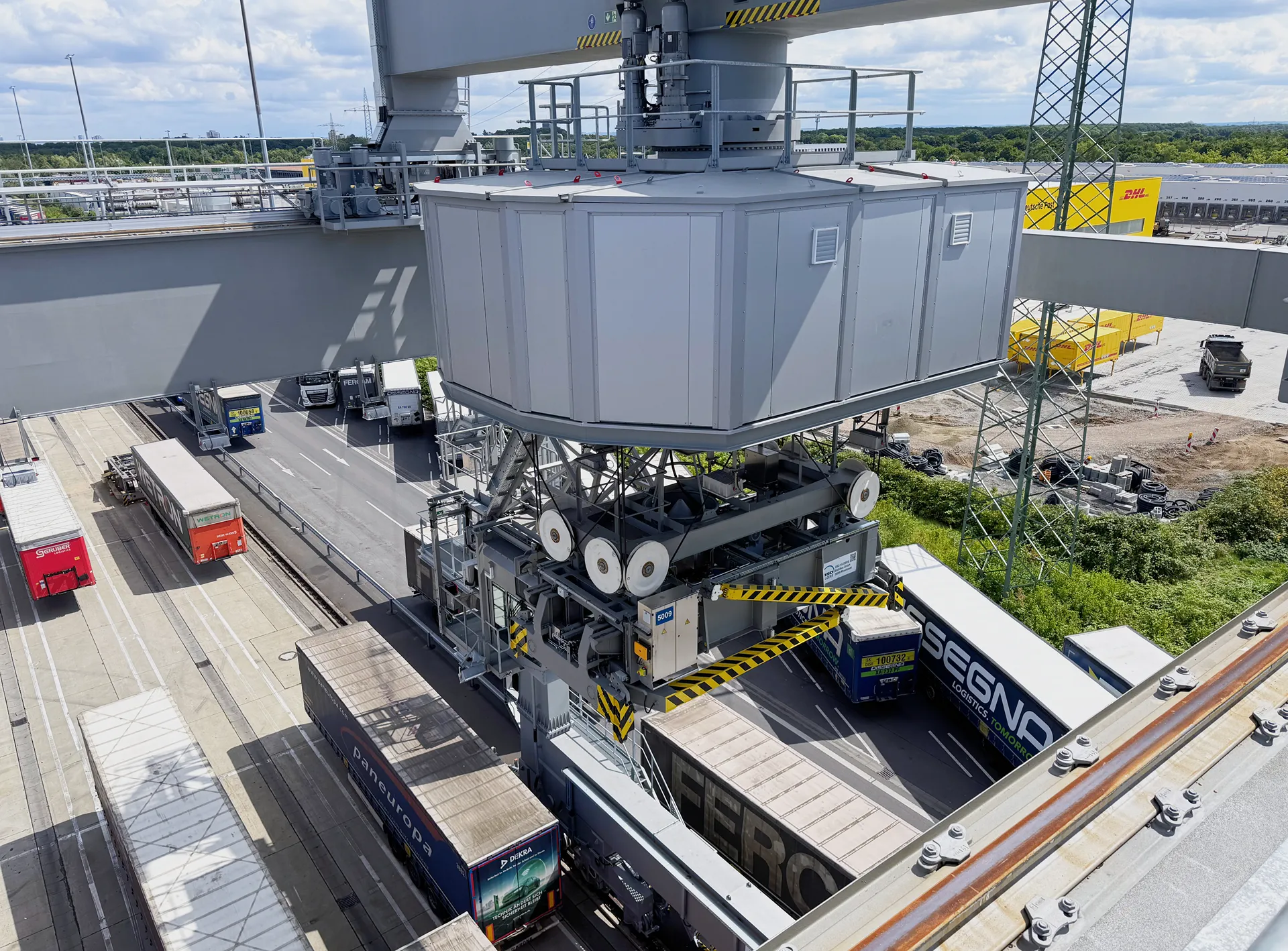
At the DSD HILGERS Intermodal Cranes at Deutsche Bahn (DUSS) in Cologne-Eifeltor, Cranium detects containers, vehicles, and people in real time and gently sets loads down.
The result: greater safety, protection of materials and infrastructure, and a seamless transfer between rail and road.
Request a quote for our Load Collision Prevention system for your crane
Protect the load, crane, and infrastructure with Load Collision Prevention and Soft Landing.

Martin Kirst
Geschäftsführer

Richard Herrmann
Prokurist

Uwe Ochs
Vertrieb


