
Monitor. Alert. Stop.
Crane Rail Monitoring for STS and Intermodal Cranes
Our crane runway monitoring system detects obstacles in the area of the rails and undercarriages before dangerous situations or operational failures occur. Directional lidar sensors monitor the track in 3D and trigger a warning or a stop.
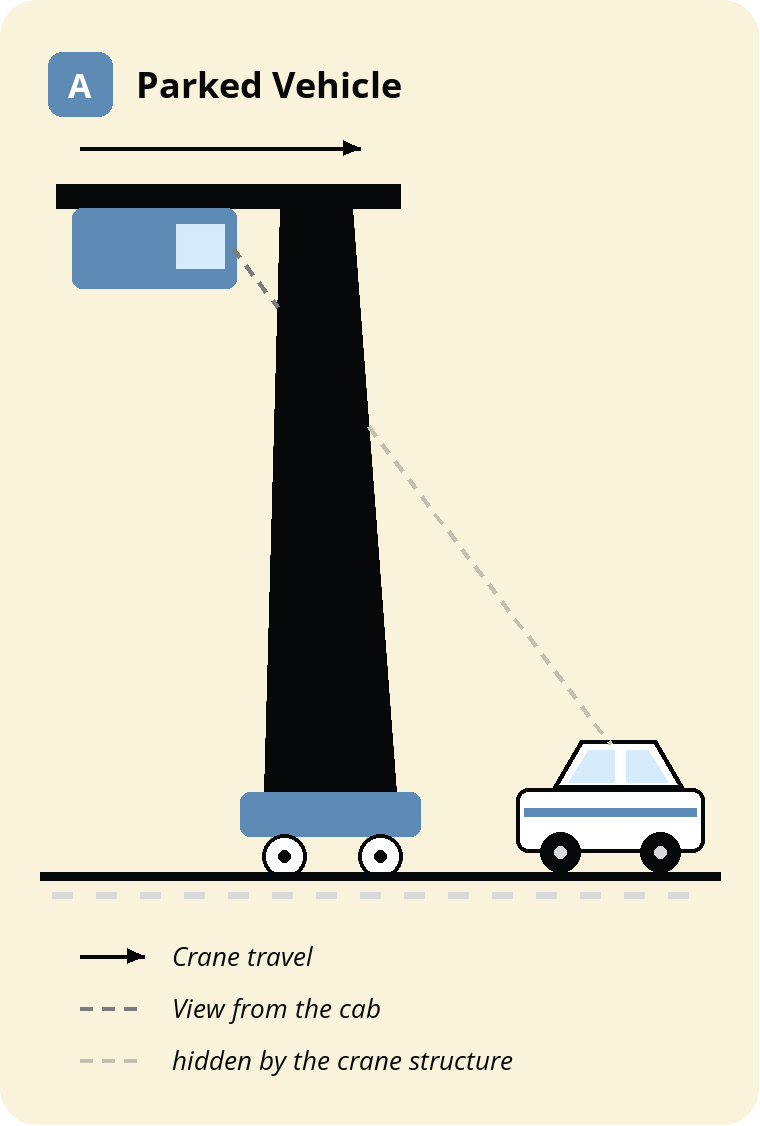
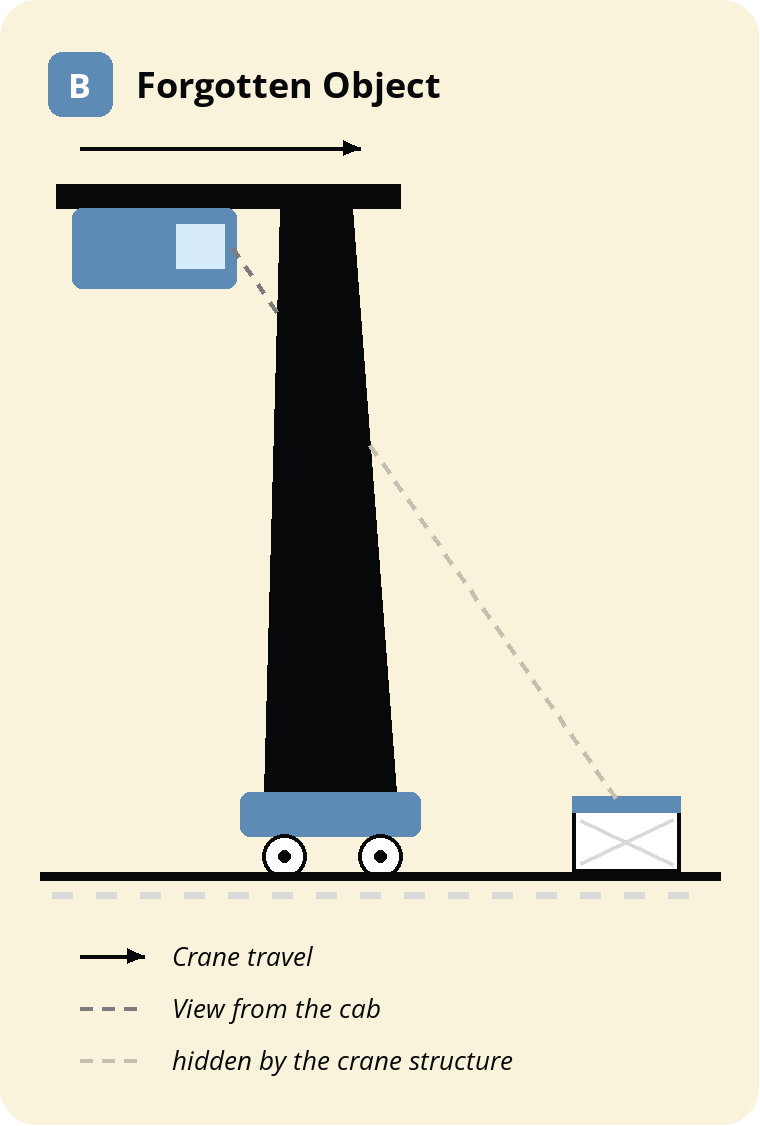
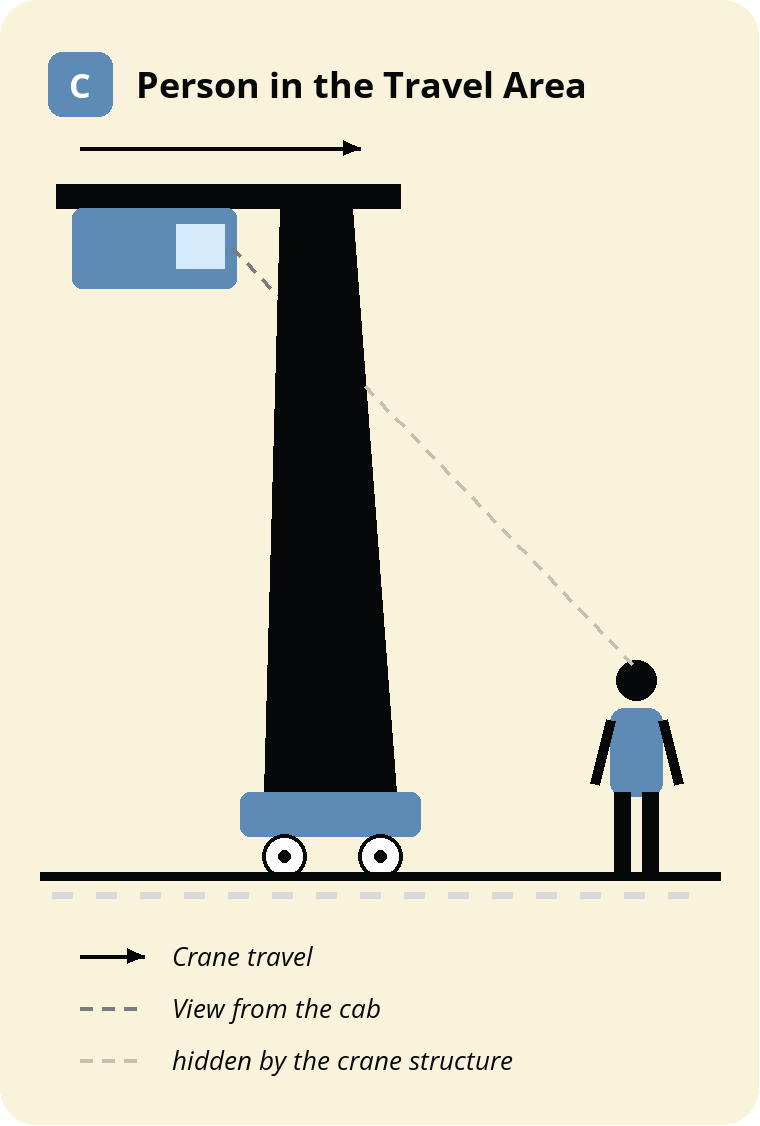
The crane operator often can’t see what’s in front of the undercarriage
There are many meters between the cab and the undercarriage, and containers, loading units, and the crane structure block the view of the rails. As a result, a parked vehicle, a forgotten object, or a person in the driving area can easily go unnoticed.
Especially with long travel distances and large spans, a split second is all it takes: The undercarriage reaches the obstacle before anyone can react.
It doesn’t stop at the obstacle that was struck
An incident on the crane runway
is one too many
for people in the operating area as well as for the availability of your crane.
Safety and availability are top priorities along the crane runway.
Limitations of Common Solutions
Trolleys are often equipped with warning signals, buffers, or simple sensors. While this helps, it has its limitations, especially on long crane runways.
View from the cabin
The tracks are far apart, and containers and the crane structure block the view of the rails.
Warning Signs
The horn and turn signals serve as warnings, but they do not detect obstacles and do not stop the crane.
Buffers and Switch Strips
They only trigger upon contact, after contact has already occurred.
Radar and Ultrasound
Depending on the environment, ultrasound and radar reach their limits.
Your Crane with Our Crane Track Monitoring System
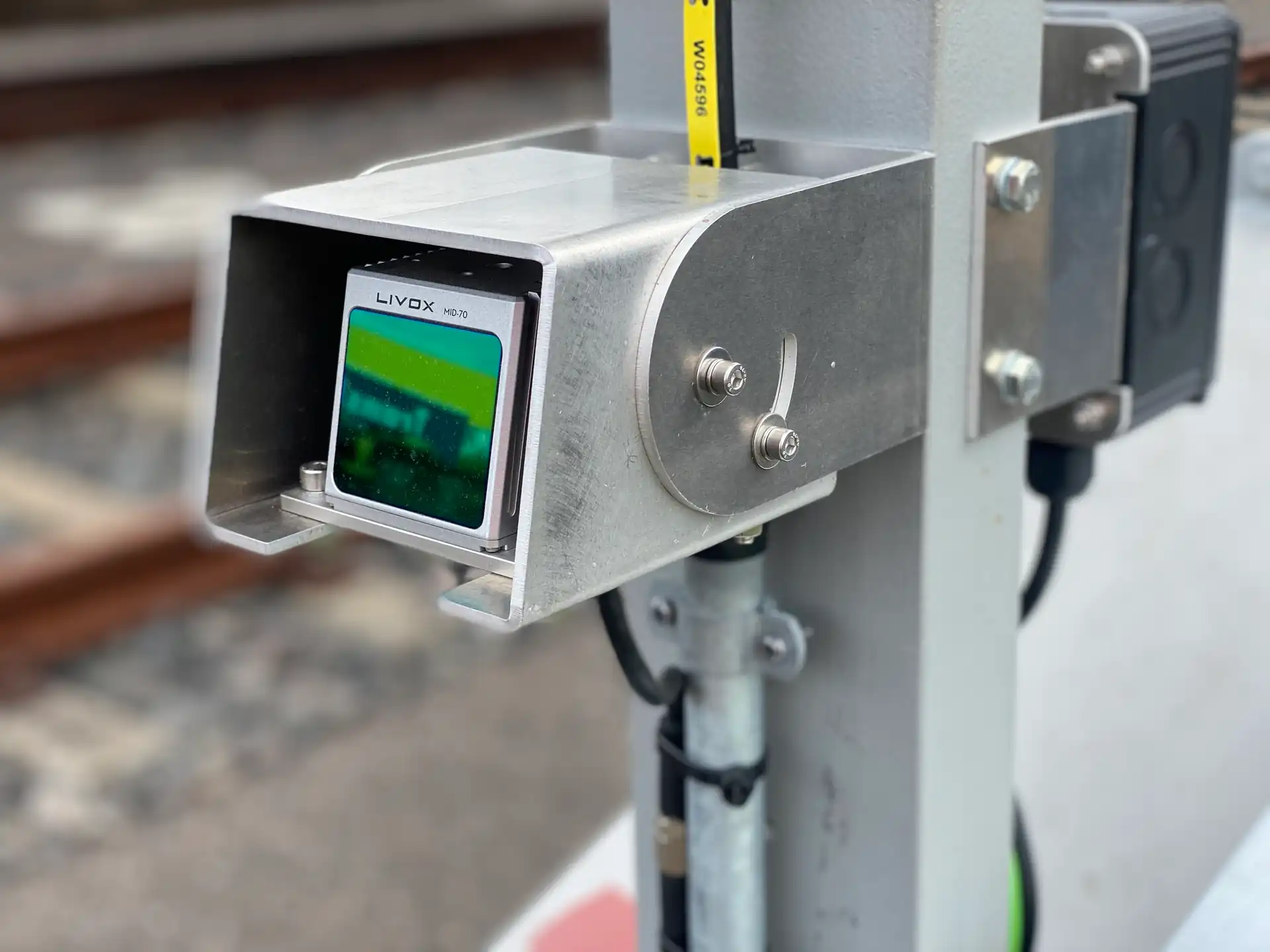
With the crane runway in view,
in real time and in 3D
Directional lidar sensors capture a 3D image of the area in front of the landing gear.
If the system detects an obstacle, it immediately issues a warning or stops the crane.
Step 1
Proximity sensors
Directional lidar sensors with a 70.4° field of view and a 30-meter range monitor the crane runway, even in rain and snow.
Step 2
Cranium Crane Track Monitoring
The industrial PC detects the nearest obstacle within the detection volume and evaluates it based on your warning and shutdown logic.
Step 3
Crane PLC
The PLC issues a warning or stops the crane via TCP or digital inputs and outputs.
Are you interested in crane runway monitoring for your crane?
Find out how we can help.
Our Crane Track Monitoring in Day-to-Day Terminal Operations
Immediate Alert
Detected objects trigger an alert immediately, not only when the vehicle reaches them.
Braking with Pendulum Damping
With the Bridge Crane module, the crane decelerates with pendulum damping when approaching an obstacle.
Durable for outdoor use
The proximity sensors are IP67-rated and suitable for use in rain and snow.
Multiple sensors can be combined
Multiple lidar sensors can be combined, for example, to cover both directions of travel.
Seamlessly integrated
Crane runway monitoring integrates with existing safety and assistance systems.
Where other sensor technologies reach their limits
Lidar detection really comes into its own, especially in environments where ultrasound or radar reach their limits.
On duty in Cologne-Eifeltor
Our technology is put to the test every day by Europe’s largest logistics and infrastructure companies. We don’t just deliver systems—we deliver measurable results.

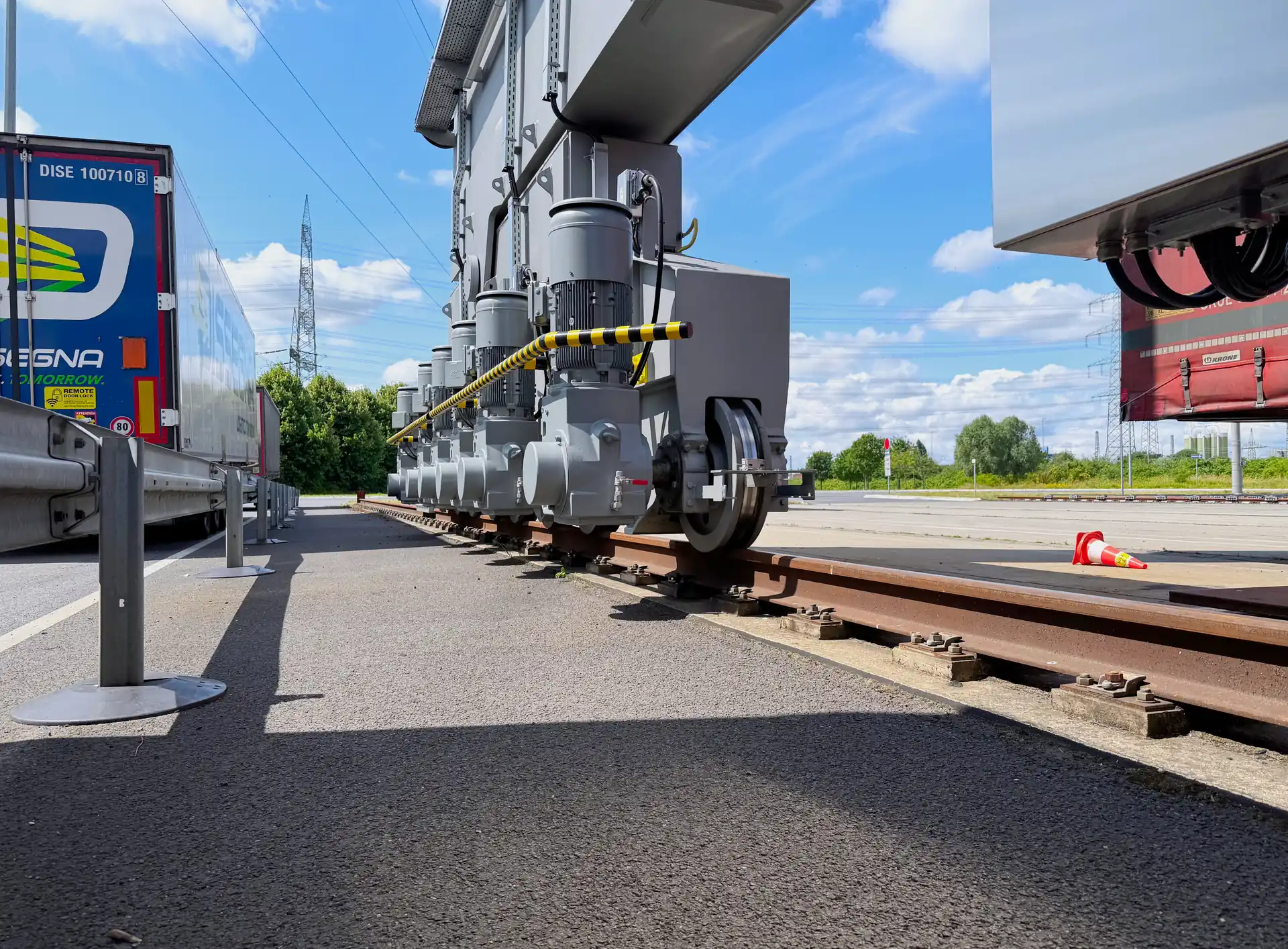
Cranium monitors the crane runway with undercarriage protection on the Intermodal Cranes from DSD HILGERS at Deutsche Bahn (DUSS) in Cologne-Eifeltor.
The result: greater safety, higher efficiency, and seamless transshipment between rail and road.
Request a quote for our crane runway monitoring system for your crane
Identify obstacles on the crane runway before the undercarriage reaches them.

Martin Kirst
Geschäftsführer

Richard Herrmann
Prokurist

Uwe Ochs
Vertrieb


